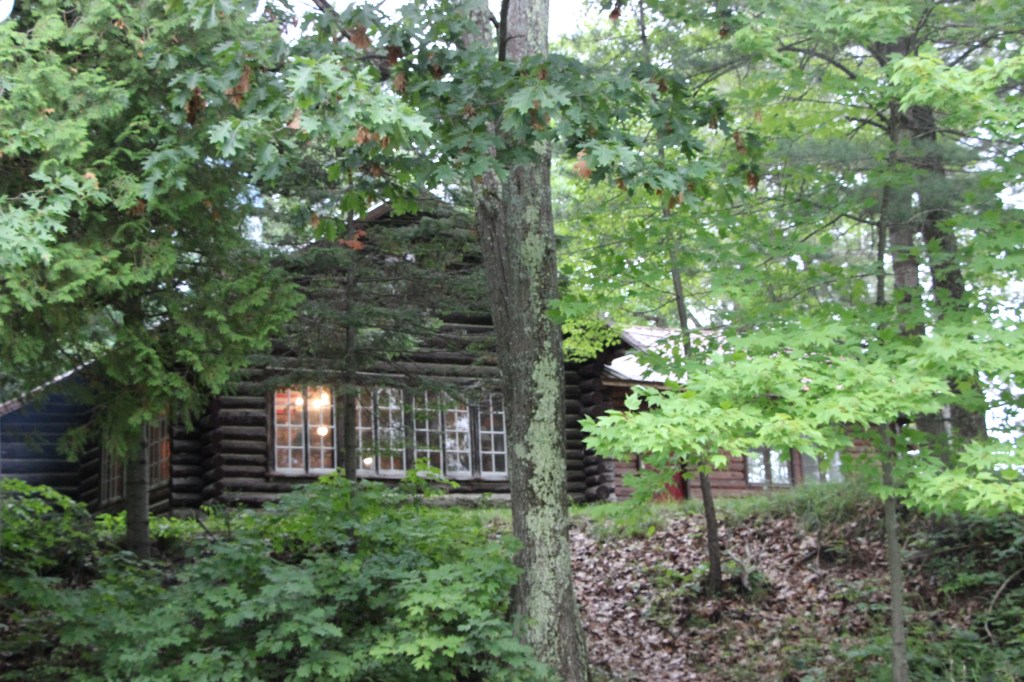
Back in the early days of dating my husband, he told me his family owned a cabin in Canada. It was rustic but had modern conveniences like running water and working bathrooms. It was shared not only with siblings and cousins, but also with a few uninvited guests — mice, bats, ants, and the like.
It was clear from the very beginning; he loved that place. If I couldn’t find a place for it in my heart, we probably weren’t suited for the long term. Even then, his retirement dream included spending as much time there as possible.
Luckily, I loved the outdoors — fishing, boating, swimming — and didn’t mind sharing space with a few critters. I had a feeling I’d love it too if I gave it a chance. I was right. I fell head over heels for something that would never be mine. Thanks in part to Canadian law.
Owning a cabin with eight other families is a never-ending lesson in compromise. There are hundreds of years of combined memories — some shared by many, others held secretly by just one or two. For the most part, we try to respect that, but it’s not always easy when one person’s treasure is another’s trash.
Case in point: the dining hall walls.
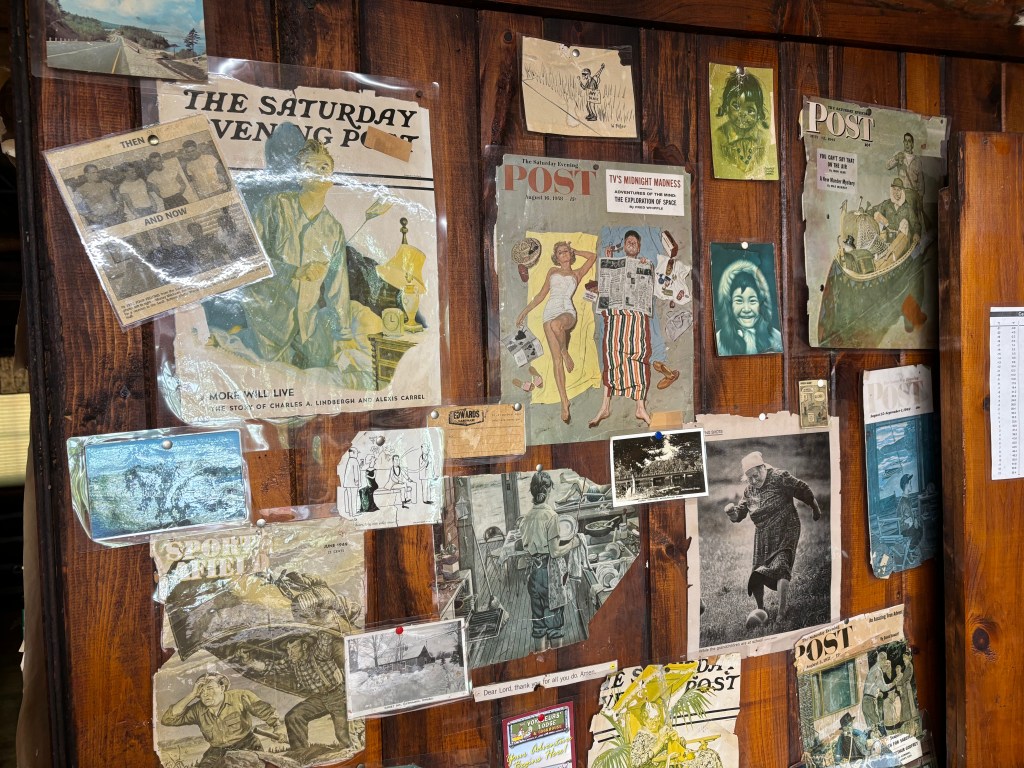
I will never forget the first time I saw them — magazine covers from the Saturday Evening Post, newspaper clippings, and crayon drawings all on display. Seeing drawings my husband and his siblings had made as children was something special. It felt like stepping back into history.
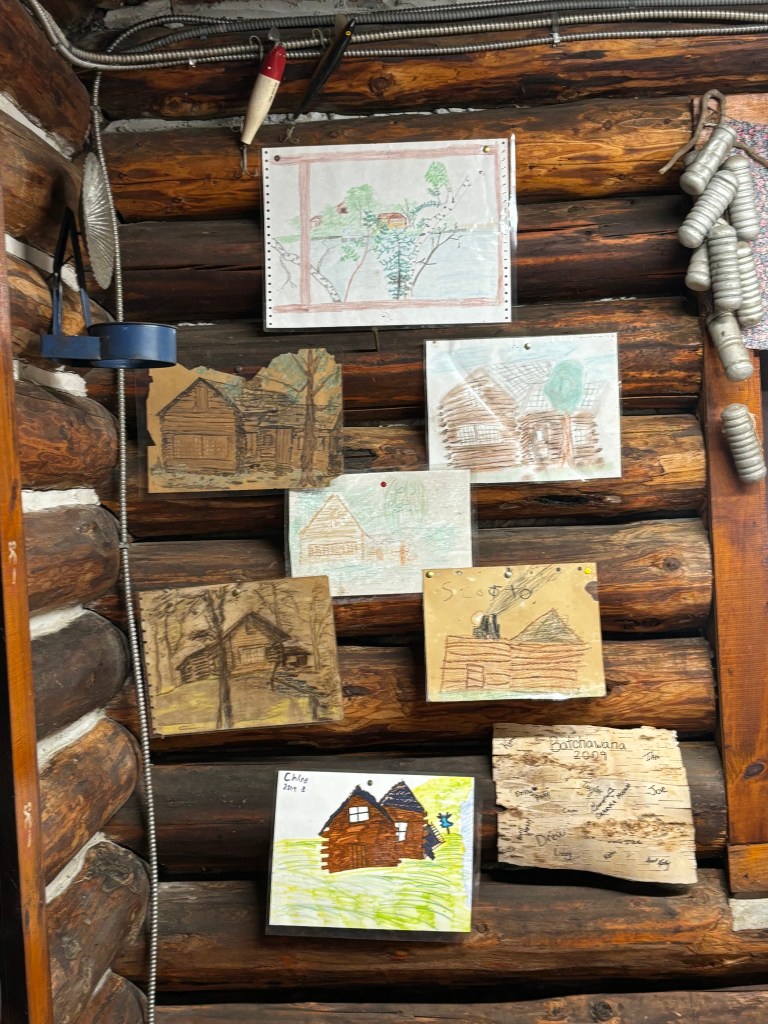
Some see clutter on those walls. I see the work of family elders; people who were here before us, leaving pieces of themselves behind.
In effort to find middle ground, everything was taken down at the end of the season. Everything that was still intact was laminated. If it was worth displaying, it was worth preserving. Before anything could go back up, the walls needed a thorough scrubbing. Layers of dust, practically cemented to the logs by layers of spattered grease from fried bacon and potatoes, were removed. The best pieces went back on the walls, and the rest were placed into a binder. Compromise.
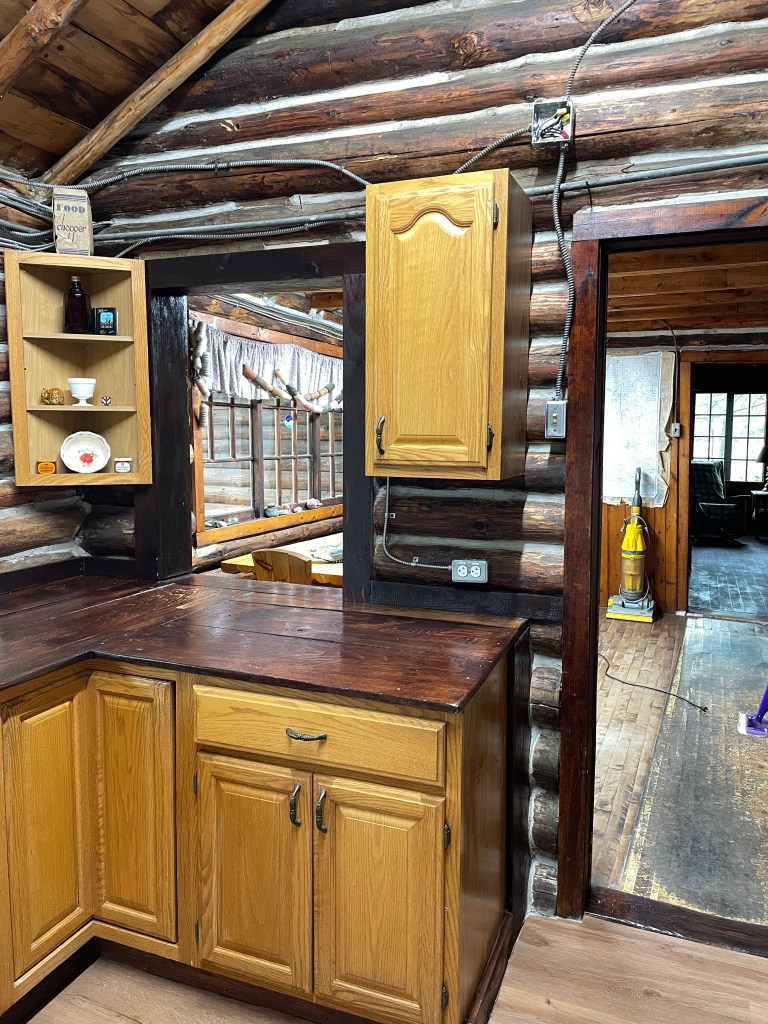
The kitchen tells a similar story. After years of talking about it, we gave the space new life with used cabinets, a homemade countertop, and new plank flooring. After hours on hands and knees, pulling hundreds of old staples and nails, we couldn’t save the original flooring. Laying new laminate flooring felt like defeat but it had to happen. Even something as simple as organizing cupboards becomes a challenge when everyone has a different idea of what makes sense. It’s far from high-end, but it’s functional; and much closer to being mouse-proof.
And then there’s the “stuff.”
With nine households involved, the cabin has become the landing place for things no one wants at home. Appliances, dishes, linens — all brought with good intentions. Over time, closets fill, shelves overflow, and much of it goes unused. What remains is a collection of items no one quite claims, and no one feels comfortable discarding. No one wants to be the one who throws out something someone else once loved.
Every effort to update or maintain the cabin becomes a balancing act between practicality and preservation. It’s not practical for nine families to share one property — especially in another country. Yet for now, it’s what keeps it intact.
No one wants to imagine a day when future generations are simply strangers who happen to share ownership. What was meant to be one man’s greatest gift to his family has become something far more complicated.
Sharing a place like this isn’t really about ownership. It’s about deciding what’s worth holding onto — and what we’re willing to let go of. It means accepting that not everyone’s vision will align, that the effort will never be evenly matched, and that what feels perfect to us may not feel the same to those who come after us.
Like a marriage, something like this doesn’t work by accident. It takes intention. It takes patience. And it takes a willingness to compromise.
I just hope we’re all up for it.
 WhatDoesn'tKillYouGirlMakesYouStronger.