-
Time & Traditions
Chapter Two: Now I’m Grandma
What makes a child grow up craving the sights, sounds and smells of Thanksgiving at Grandma’s house? What makes them want to return in their thirties and forties, bringing their own children along?
I don’t know that there’s a formula, but you know that I’m working on it.
I’ve hosted Thanksgiving for over forty years, but it’s only been during the last five that I’ve been hosting as a Grandma. And with that title comes a new appreciation for the people who kept those family gatherings going when I was growing up.
There is one Thanksgiving tradition I could happily do without. Every year, I buy myself a new holiday shirt. I put off getting dressed until the last possible minute to avoid getting something on it. And somehow, I STILL manage to splatter gravy on it before the day is over.
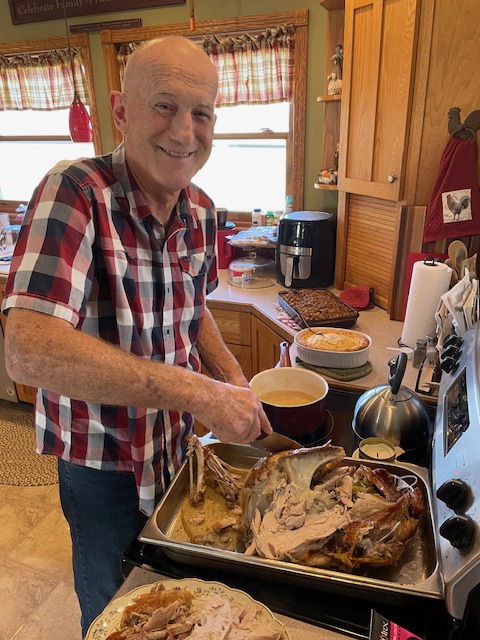
You would think that by now I would be smart enough to wear an apron. Maybe it’s time to look through my china cabinet and see if I can find one of my Grandma’s old aprons!
This year, I’m having our oldest grandchild come over on Wednesday to help with preparations. Maybe we’ll make orange fluff together or create paper hand turkeys for each place setting. I want the grandchildren to feel like they’re part of Thanksgiving, not just guests who show up when dinner is ready.
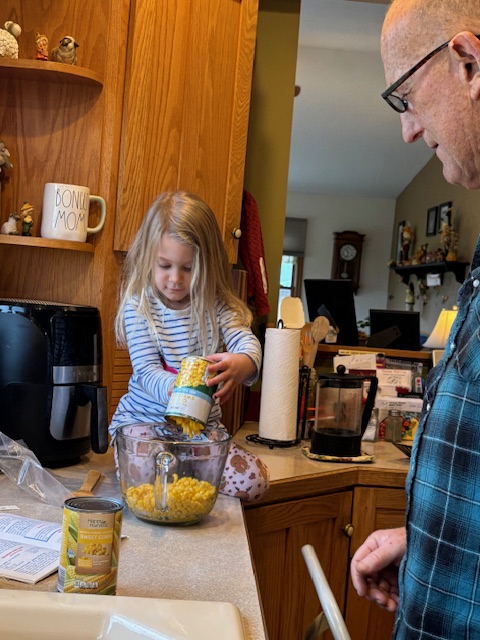
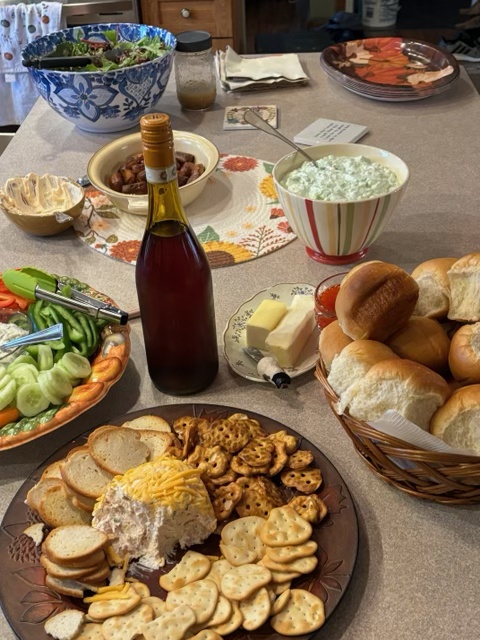
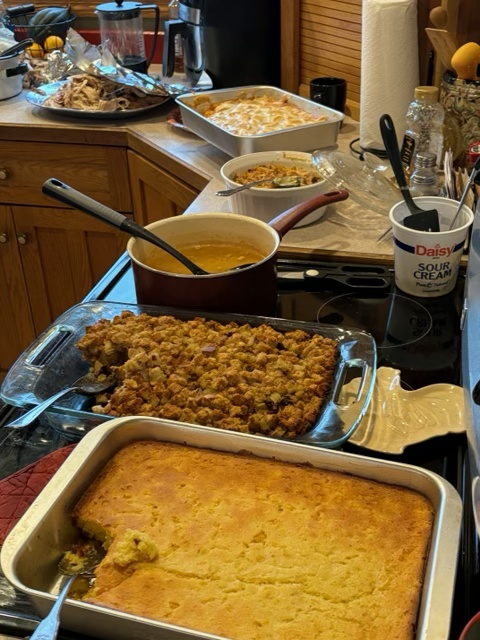
Papa Thurston and our oldest grand helping with corn casserole. On Thanksgiving morning, I’ll go through my regular routine of making stuffing with lots of celery, onions and butter. The house will fill with those familiar Thanksgiving smells. The Macy’s Thanksgiving Day Parade will be on television, although there’s a good chance I won’t see any of it.
My first goal will be to get dressed before the family arrives.
My second will be to have everything on the table at the designated witching hour of 1 p.m.
And my third? To let someone else do the dishes.
That last one will be the hardest.
There’s a Meijer commercial featuring a woman rushing around, insisting, “I’ve got that!” and “Let me get that!” Every time it comes on, Thurston looks at me and says, “That’s you!”
Unfortunately, he’s probably right.
I have a hard time relaxing when there’s a kitchen full of dirty dishes waiting for me. I tell myself I’ll sit down once everything is cleaned up. But by then, the best stories have been told, and the grandchildren are already exhibiting signs of needing a nap. Several are heading out to the next stop of their holiday journey.
I remember my late Aunt June, who always seemed to find a baby to rock or someone to put down for a nap whenever the dishes needed washing. At the time, I thought she was pretty clever at avoiding kitchen duty.
Now I know she simply understood something the rest of us didn’t. Dishes should be for grown kids.
I come by it naturally. When I think back to those wonderful Thanksgiving dinners of my childhood, I remember the house, the cousins, the food and the table settings. But I don’t have many memories of Grandma actually sitting down and enjoying the day with us.
She was probably too busy making it all happen.
And that’s what has me thinking. I’ve spent years trying to make sure everyone remembers Thanksgiving dinner. It recently occurred to me that I should probably make sure they remember Grandma, too.
I want them to remember the conversations we had, the things we laughed about and the time we spent together. Not just the meals I cooked or the traditions I organized.
The dishes will always be there. The babies won’t.
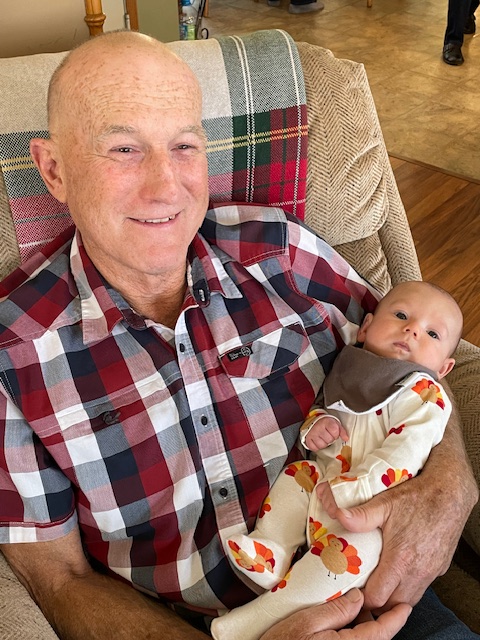
This year, I bought a 100-piece set of Magna-Tiles. The kids and I are breaking them out right after coffee and dessert. And if one of the little ones needs a nap, I just might borrow a page from Aunt June’s playbook and snuggle up with them.
Before we know it, Thanksgiving will be over, Christmas will have come and gone, and we’ll be wondering where another year went.
This year, I’m determined to spend a little less time in the kitchen and a little more time making memories with the people who came to share the day.
Complete with gravy stains on my new shirt.
We’re all aging. Let’s do it out loud.
— Nora
-
Time & Traditions
Chapter One: The Way We Remember It
Time has to be one of life’s greatest mysteries. Years go by in the blink of an eye, yet there are days when even minutes seem to last forever.
November spurs thoughts of time and traditions for me. Past hunting seasons and Thanksgiving dinners. While many welcome the Christmas season the day after Halloween, I’m still waiting until Thanksgiving. Being a seasonal decorator, fall “threw up” in my house after Labor Day, and it will stay that way until the house empties out on Thanksgiving Day.
For years, the Thanksgiving table was barely cleared before the newspapers came out. Those thick editions of the State Journal, stuffed with Black Friday sale flyers, were spread across the table as we studied the bargains and planned our shopping routes. There was something exciting about comparing the sales and deciding which stores deserved our attention first.
That was a tradition in itself. And judging from conversations I’ve had recently, it was one shared by plenty of other families. Now we can scroll through Black Friday sales on Amazon long before Thanksgiving, all from the comfort of our couch.
I recently saw a Facebook post from someone reminiscing about the days of big holiday dinners with all their cousins, wishing things could still be that way. I understood exactly what they meant.
As children, those seasonal gatherings were wonderful. Cousins meant someone other than your siblings to play with. We understood that we were related but were pretty clueless about the family dynamics among the adults who had grown up together and then gone their separate ways.
We didn’t know that Uncle Joe had joined the Army to avoid trouble with the law back home. Or that Aunt Suzie had eloped to avoid embarrassing the family when Cousin Bill arrived just three months after the wedding. All totally made up for the sake of example, but you know what I mean.
That was adult stuff. It happened then, just as it happens now, but it wasn’t part of our world.
Wasn’t life grand when we were clueless?
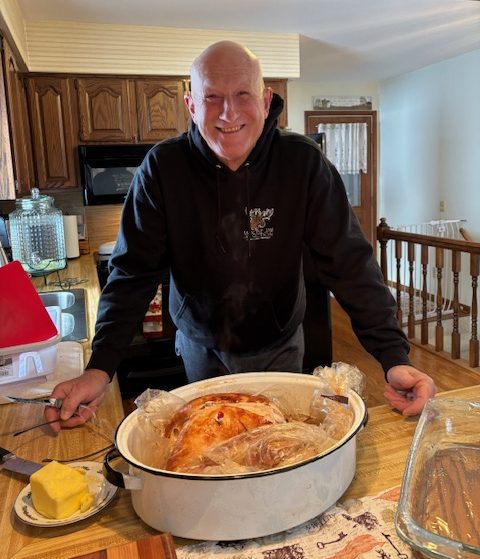
I don’t think those big family dinners disappeared because families got too large. If anything, some of those gatherings were bigger than the ones we have today. Yet somehow, there was always room at Grandma’s table.
We didn’t give much thought to how it all came together. We just showed up, found our cousins and waited for dinner. Someone had figured out where everyone would sit, how much food to prepare and probably how to keep the peace among relatives who didn’t always see eye to eye.
We never imagined those gatherings might someday end. Thanksgiving at Grandma’s was simply what we did. We assumed the cousins would always be there, the house would always be there, and someone would always know how to pull it all together.
That feeling doesn’t necessarily disappear with middle age. My 38-year-old son still wants both Thanksgiving and Christmas to continue exactly the way he remembers them. Same food, same time, same routine. We tease him about his resistance to change, but I get it. He’s not just holding on to his own childhood memories. He wants his children to have them, too. He’ll be expecting home-baked rolls and yummy strawberry freezer jam until his final days, even if he’s the one who has to make them.
I wonder how much thought my grandmother gave to the memories she was creating. Did she worry about whether everyone would come? Whether there would be enough food? Whether the grandchildren would someday remember those gatherings as fondly as I do?
Or was she simply doing what her mother before her did?
I wish I could ask her.
Because somewhere along the way, those Thanksgiving dinners became more than a meal. They became part of our family history.
But what happens when Grandma stops cooking?
I’ve lived long enough to watch traditions pass from one generation to the next. Some survive with a few changes. Others become something entirely different.
Like something out of a Thanksgiving Day football game, sometimes signals get crossed and the ball gets dropped. One player fumbles the handoff, but ultimately, the whole team suffers the loss. Sometimes it’s a loss from which the team never recovers.
Before we know it, gatherings that once seemed as dependable as Thanksgiving itself have become nothing more than memories of how things used to be.
Now that I’m Grandma, I realize how easily that history could stop being passed along.
I don’t want my grandchildren to grow up remembering that we used to get together for Thanksgiving. I want them to grow up expecting that we will.
Coming Sunday: Chapter Two — Now I’m Grandma
We’re all aging. Let’s do it out loud.
Nora
-
A Perfectly Uneventful Vacation
After sharing my latest pontoon debauchery on my Facebook page, I seem to have left myself short on time to write this week’s column. While enjoying a ten-day tour of six state and county parks on Michigan’s east side, I fully expected something to present itself as a great new story.
Much to my surprise, it’s been wonderfully uneventful!
When four couples over the age of 60 are hauling 128 feet of homes on wheels, you never know what might happen. Other than a wet shoe or two while rock hunting along the beach, I’m thrilled to report we’ve survived without incident.
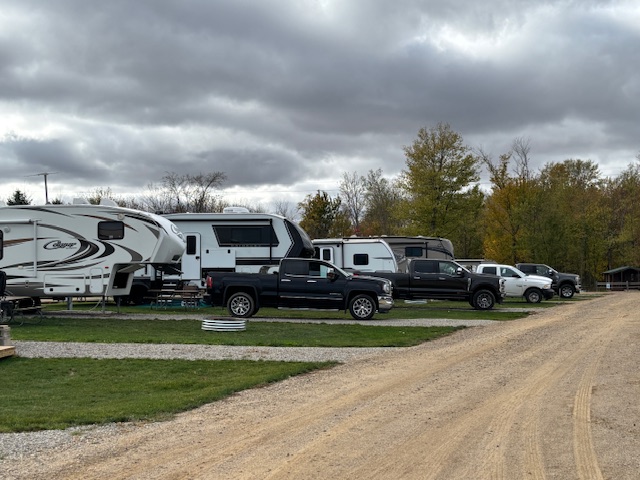
Our glamping caravan set up for the night. Unfortunately, the same can’t be said for my fall weight-loss efforts.
It seems the fuzzy purple creature on my Simple weight-loss app, responsible for monitoring my eating and exercise, died a slow death this past week. There’s just something about homemade beef stew with bread, chili and cornbread, smoked brisket and chicken pot pie from scratch that had me standing in line for seconds while the little guy begged me to log my meals.
Follow that with homemade cookies, crockpot apple crisp and a sweet, nutty version of Chex Mix, and I was toast. Fortunately, I’d packed several pairs of baggy pants. Obviously, I knew what kind of vacation this was going to be.
The weather cooperated beautifully. We started out in shorts and T-shirts, but as we prepare for our final stop, sweatpants and hoodies are replacing summer clothes.
The trees have been showing off their fall colors, too. We’ve enjoyed campsites overlooking Lake Huron and wooded lots where falling leaves create a crunchy, colorful carpet beneath our feet.
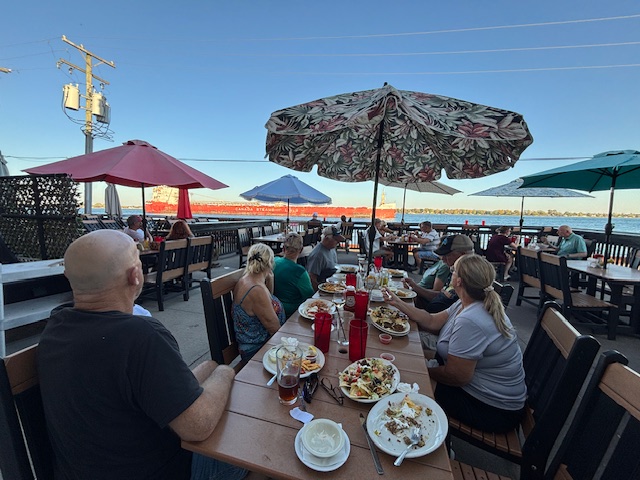
We enjoyed a meal while watching the freighters in Marine City on the St Clair River. Evenings around the bonfire brought plenty of stories, laughter and music spanning several generations. The swirling smoke kept us changing seats, and I’m fairly certain we’ll all be taking home at least one load of laundry that smells like a campfire.
We explored local watering holes, visited with the locals and contributed generously to the economy. Pinconning was especially successful at separating us from our money, thanks to Northwoods Wholesale Outlet and Wilson’s Cheese Shoppe.
If you’ve never camped in Michigan during the fall, I highly recommend it. The crowds are smaller, the scenery is beautiful, and there’s something special about sharing a campfire with good friends as the season winds down.
As for my weight-loss efforts, I’ll get back to those when we get home.
Assuming that fuzzy purple creature is still speaking to me.
We’re all aging. Let’s do it out loud.
— Nora*As printed in The County Journal on 10/24/26
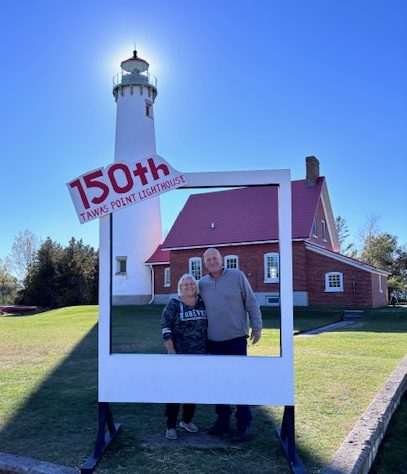
One of our light house stops on the tour. -
Technically, They Didn’t Drink It All
As we prepared to return to Awanabatch one last time this year, we were going through the usual questions: What are we taking, and what has been left there by the previous inhabitants? As the last ones there for the year, we also have to ask: How much needs to come home?
I’ve already shared that, although it wasn’t our vote, the majority established a rule that NO leftover food was to be left for the next family. Despite that rule, food continues to accumulate. People have been leaving behind bread, condiments and other groceries, to the extent that we will need extra coolers and totes just to remove everything before winter.
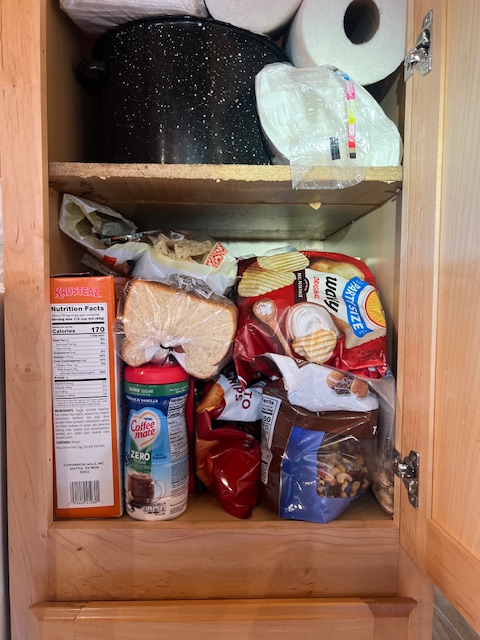
Just a fraction of the food left behind this year… On one particular trip this summer, the kitchen cupboards were already so full that my sister-in-law unloaded her food supplies into a bedroom closet. It was a practical solution, but it left us with another question: Where were we supposed to put the clothes that actually belonged in the bedroom?
It seems unwanted food is left in the cupboards to age and multiply, while items you were actually planning to use have a considerably shorter life expectancy.
We learned that with charcoal.
Knowing we would be returning, we left three bags behind rather than hauling them home. When we came back, all three were gone.
Well, technically not. Two bags were gone, and the third contained a small handful of briquettes. No one mentioned using them, and no one warned us that we needed to bring more.
The charcoal was frustrating, but we could work around it. The discovery in the liquor cabinet felt a little more personal.
If you’ve never traveled to Canada, you might not realize that spirits are considerably more expensive there than we are accustomed to paying. To avoid that unnecessary expense, we plan ahead and bring the allowable amount across the border. Friends traveling with us also contribute a bottle or a case of beer to the shared supply. Whether everyone drinks it or not, it gradually creates a selection for evening cocktails on future visits.
After one trip, we had left a substantial supply behind—not only what we hadn’t finished, but several bottles our friends had brought and left. We were well stocked.
Usually, we kept our “stock” in a sealed tote, but because we were returning in a few short weeks—and because there was so much of it—we left it in the liquor cabinet. After all, we’re family. If someone ran short and needed a drink or two, we wouldn’t mind sharing. There was plenty.
At least, we didn’t think we would mind.
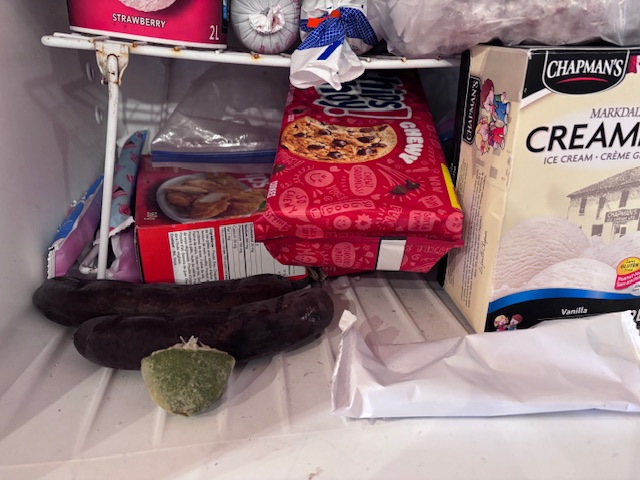
Thanks for the bad bananas and half a lime; but where’s my Tequila?? When we returned, we went against our better judgment and didn’t bring any alcohol with us. We already had more than enough waiting for us at Awanabatch.
At least, that was how we had left it.
After a long day of travel, loads of food, clothing and supplies are hauled in, unpacked and stowed. Once that is finished, relaxation time officially begins. It’s time for cocktails down by the water.
On this particular trip, we reached that moment and discovered that someone else had apparently been relaxing on our behalf.
Whoever had worked their way through our supply had thoughtfully left a dribble in the bottom of nearly every bottle. Not enough to make a drink, but enough to avoid being named the person who emptied it.
We didn’t think we needed anyone’s permission to leave our own alcohol for our own return. Evidently, while no one wanted our leftover food, our leftover liquor was another matter entirely.
We could have driven to the liquor store and replaced it. We weren’t stranded in the wilderness. We were simply too cheap—and by then too irritated—to pay Canadian prices for alcohol we had already purchased once.
No one ever confessed to drinking it. Perhaps several people had each helped themselves to just a little and no one realized how much was disappearing. The same may have been true of the missing charcoal.
That is one of the mysteries of sharing a family cabin. The supplies no one seems to want multiply, while three bags of charcoal and a cabinet full of liquor can disappear without anyone knowing what happened.
Whoever helped themselves can continue to claim they didn’t finish anything.
Because technically, they didn’t drink/use it all.
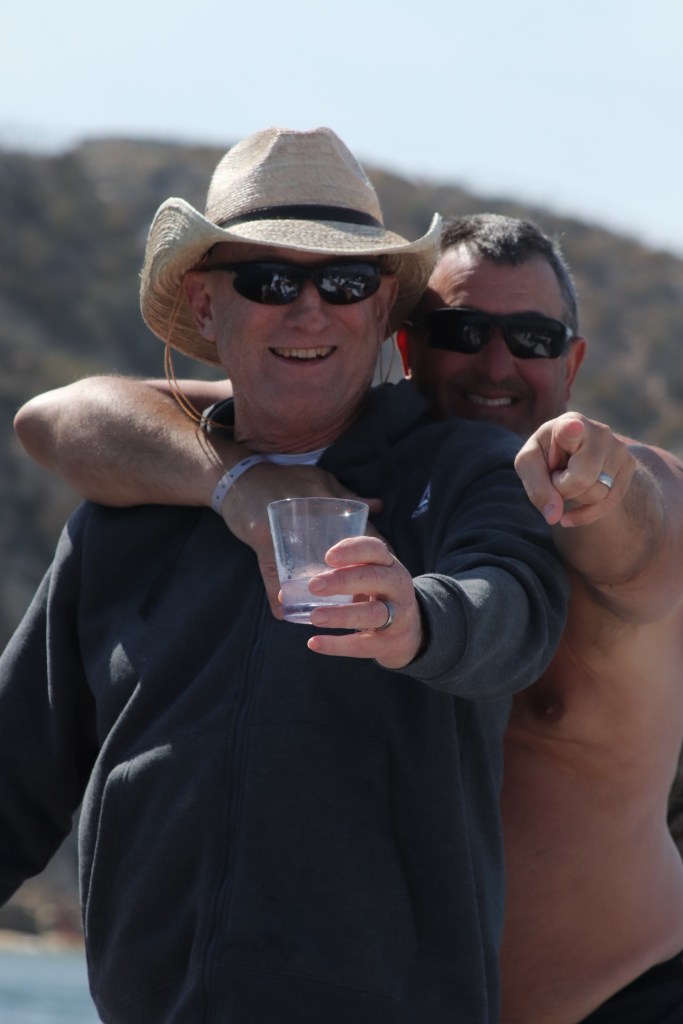

Thurston and Tal enjoying a drink at Awanabatch – and the only kind of mosquito bite we like up there. -
Budgeting for Grands
I think everyone has one. That month where it seems like every day someone is having a birthday. Our month is September. Both my children were born within a week of both their grandmothers. While we could manage doing only one party, it still meant a lot of purchasing in the kids’ early days.
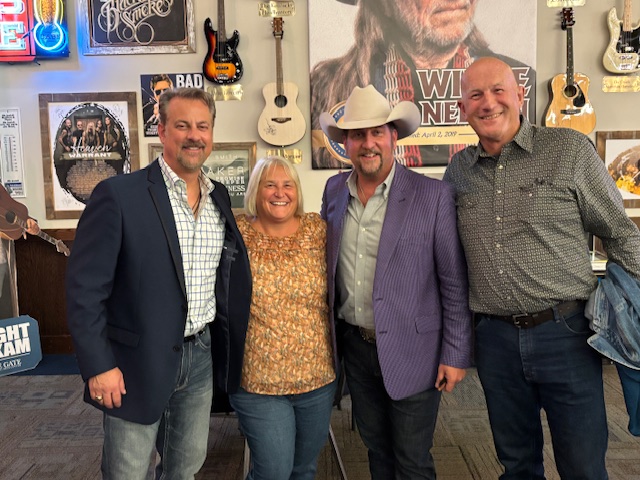
Meet and greet with Wilson-Fairchild for Thurston’s B-Day Now birthday month also includes Thurston, his son and about a dozen of our closest friends. At this age, you would think we would want to ignore birthdays, but our friend group seems to take birthdays to a new level. A September birthday party for the group as a whole and then several birthday celebration suppers out. Based on the bathroom scale, a few too many of them.
After a lifetime of helping people budget, you’d think I’d have birthdays figured out by now. You’d be wrong.
Thurston’s easy. He doesn’t need more stuff. We already had to buy a cottage to house our extra stuff. If we buy each other anything, it’s usually dinner or a concert. Showing our age, this year we went to the Blue Gate Theatre in Shipshewana to see Wilson Fairchild, sons of members of The Statler Brothers.
Before we even had grands, we decided that we weren’t going to spend ridiculous amounts of money buying things for them. Instead, we started “Adulting Funds” for them. Someday, when they need money for college, a car, a house or whatever other expensive surprise adulthood has waiting for them, they’ll have a little help from Papa and Grandma.
This plan worked beautifully when they were babies.
The grown kids get money. We all know that whatever we buy, they already have three of them, or we’ll find it unused—still sitting in the box the next time we visit.
Babies don’t ask for Elsa dolls or princess dresses. They didn’t have Amazon wish lists. It wouldn’t hurt to at least look at the list, would it?
Surely putting money into the Adulting Fund and buying one or two little birthday presents wouldn’t destroy our financial plans. And a princess dress barely counts. It’s mostly fabric. Besides, if we want to keep the accounts a secret until they’re adults, we have to give them something. Otherwise, we’re the grandparents jetting around the world on vacations but too cheap to buy their grandchildren birthday presents.
That would be disgraceful!
Fortunately, I spent a lifetime working with budgets.
I know exactly how to revise one.
We’re all aging. Let’s do it out loud.
— Nora*As printed in The County Journal on October 10, 2026.
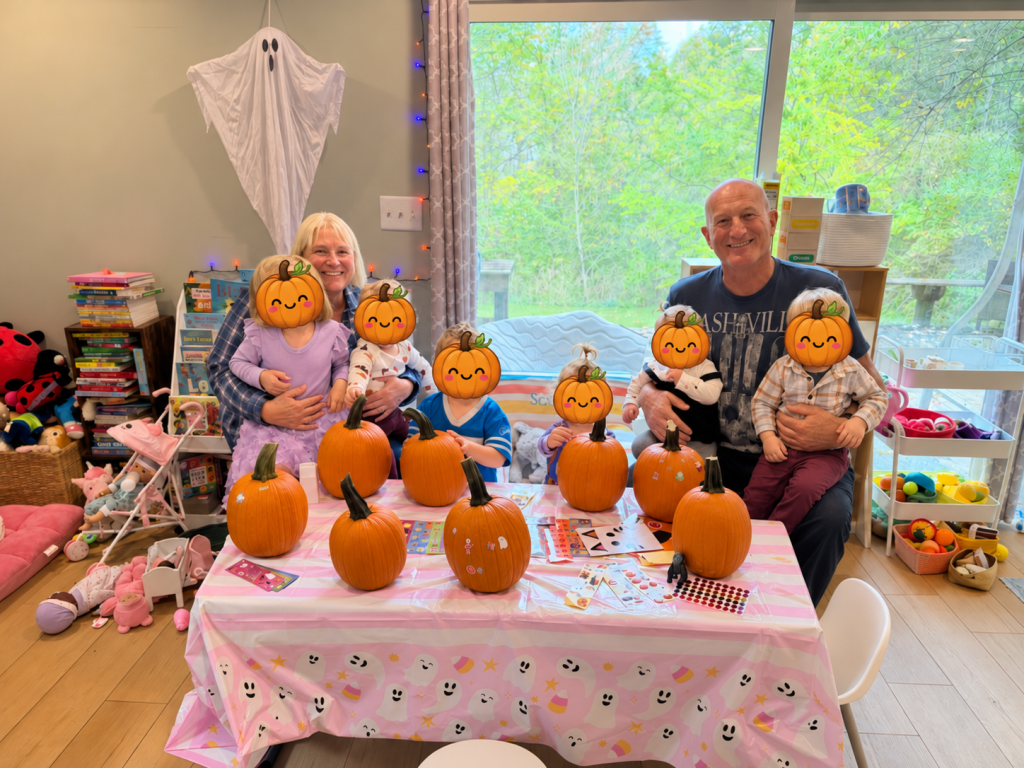
Birthdays continue into October with our 2- year-old granddaughter’s party with all the grands in attendance. I think our smiles say it all! -
The Cost of Retirement
After a lifetime of helping people budget, I would be remiss if I didn’t write something about the unexpected costs of retirement.
I’ve already written about the importance of working with a financial advisor. Budgeting for retirement is key. Let me share a few expenses that I don’t think your financial advisor will remember to include in the spreadsheet.
Like coffee.
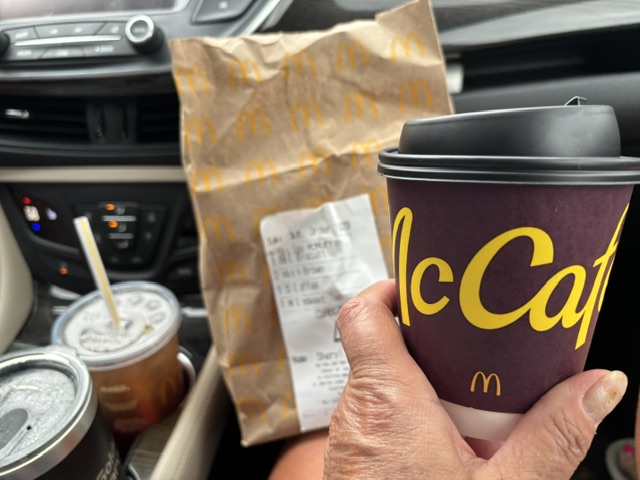
That cup on the way out the door becomes a whole pot when you’re home all day. They don’t give that stuff away anymore, particularly if you require creamer and flavoring to make it taste less like coffee.
Then there’s toilet paper. I’ll let you do the math. Being home all day definitely increases the household paper-product budget.
Retirement also seems to require three meals a day. When you’ve been awake since 4 a.m. for absolutely no good reason, breakfast by 10 becomes essential. Three meals a day means more groceries, more dishes, more dish soap or, without a dishwasher, more paper plates.
I never fully appreciated the occasional lunch the boss bought or those meetings where someone else provided the food. Now Thurston and I meet other retirees for lunch, dinner or drinks. “Socializing” is something else we seem to have underbudgeted.
Then there’s gas. Retirement gives you plenty of time to run the roads and provide Grandma’s Taxi Service. Once the grandkids start activities, there will be games and performances to attend—usually followed by more eating on the run.
If you’re fortunate enough that your grown children still have time for an occasional meal out with you, you’ll soon discover that even though they’re adults making more money than you are, it’s pretty much a given that you’ll be picking up the tab.
Which brings me to another retirement expense I hadn’t anticipated: calories.
A disturbing number of my hobbies involve sitting; writing, reading, diamond art, traveling and the casino. Nothing that might accidentally burn calories. At least our remodeling projects occasionally force me out of a chair.
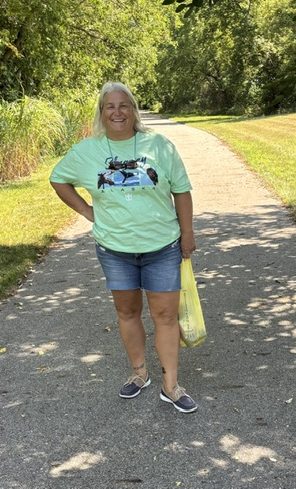
Thurston walks all over town, but he goes early in the morning. I’m retired. I see no reason to get dressed that early.
I did join him on a walk the other afternoon. I felt pretty good about myself, too—right up until my exercise route somehow ended at Dollar General.
Apparently, even free exercise costs money.
We’re all aging. Let’s do it out loud.
— Nora
*As published in The County Journal on September 26, 2026.
-
A Little Help Would Be Nice
After telling Thurston we needed to stop spending money, I happened upon a 22-foot Smoker Craft pontoon on Facebook Marketplace at a great price.
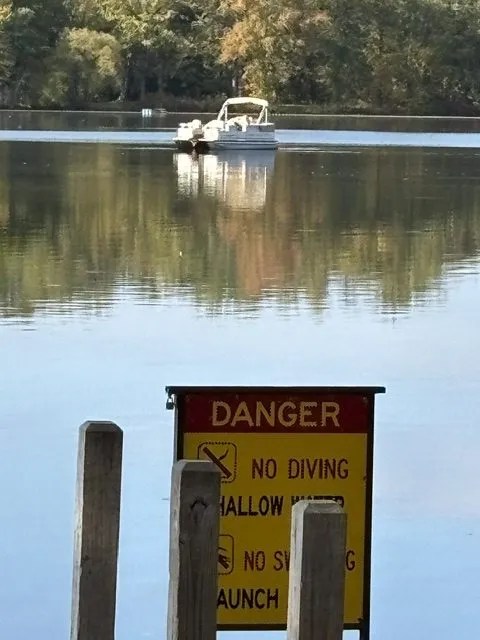
It wouldn’t hurt to go look, would it?
Better take a trailer. Just in case.
Of course, it was exactly what we were looking for. The seller asked Thurston how he was at backing a trailer. No worries. He’s a retired farmer. Backing a trailer is second nature.
After backing down what seemed like a quarter mile of narrow, winding, tree-lined trail, we loaded the pontoon onto our way-too-small trailer.
We pumped up the tires, crossed our fingers and headed down the road. The boat was sitting a little crooked, which actually helped because one of the trailer glides was broken and rubbing against a tire. If we could just make it to our friends’ house across town, we’d call it a win.
We made it.
Yesterday, Thurston rented a much bigger trailer for four hours. Plenty of time to transfer the boat, get it home, unload it into the barn for winter and return the rental.
Shouldn’t it be?
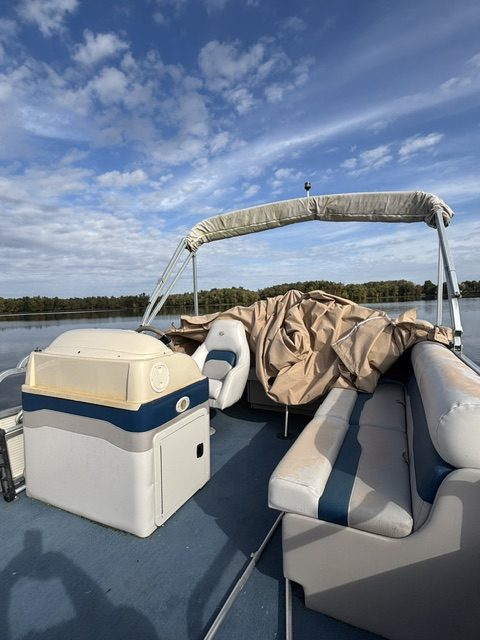
Our carefully devised plan involved taking the pontoon to a nearby lake, launching it, and leaving me with the boat while Thurston exchanged trailers. He’d return, we’d take a little joyride, reload the pontoon onto the safe trailer and haul it home.
All within four hours.
On the way, we were laughing about how much effort it had taken the two of us to formulate this plan. I suggested that perhaps we should consider adding a third person to our relationship.
Not for romance. For additional brainpower.
Thurston had checked out the boat launch beforehand, so we knew it wasn’t far. Unfortunately, the GPS took us to the lake but not the launch. After turning an eight-mile trip into a twenty-minute drive, we headed back the other way.
Our next road was closed. Bridge out.
Forty-five minutes into what should have been a ten-minute trip, we finally arrived, with the questionable trailer tires somehow still intact.
We unloaded the pontoon, and I prepared to wait at the dock. I’d swapped phones with Thurston because mine was nearly dead. Again. As usual.
Almost immediately, another boater needed the ramp, so I decided to motor out a little way and enjoy the beautiful afternoon. Wish I had at least grabbed some sunglasses.
I put the boat in neutral, shut off the motor and even pulled the key to make sure I wouldn’t accidentally run down the battery.
Pretty proud of myself.
Nearly an hour later, I’d drifted considerably farther into the lake. Time to start the motor and head back.
I turned the key.
Nothing.
Oh, you’ve got to be kidding me.
The fuel gauge moved when I turned the key, so I knew there was some electrical power. Maybe there was a trick to starting it. A button? A special throttle position?
I moved the throttle up and down, searching for that sweet spot.
Nothing.
There I sat, alone in the middle of a good-sized lake, in a 22-foot pontoon. I hadn’t just forgotten to grab my sunglasses; I had no ID, no ownership papers, no proof of insurance, no life jackets and, worst of all, no paddle.
Thank goodness for Thurston’s phone, which still had 25% battery.
He was just pulling into the parking lot when I called him. Thankfully, he had my phone charging in the truck. It took some convincing before he believed I wasn’t joking.
“Let me think, and I’ll call you back.”
Meanwhile, the clock was ticking on our four-hour trailer rental. Sitting in the middle of the lake waiting for someone to rescue me wasn’t going to get that trailer returned on time.
Being the resourceful woman I am, I began searching the boat for something I could use as a paddle.
The only thing I could find was the plastic battery cover.
Basically, a glorified Tupperware lid.
Well, desperate times call for desperate measures.
I stretched out on my belly across the front of the pontoon, hung over the edge and started paddling.
Once I got the boat moving, I was afraid to stop and lose my momentum. I could see Thurston standing on the distant dock and one fishing boat on the other side of the lake.
Neither appeared particularly concerned about my situation.
So I paddled.
And paddled.
Occasionally, I’d lift my head to check my progress. I was making headway. At this rate, I figured I’d reach shore by nightfall.
I kept a death grip on that plastic lid. If it slipped out of my hands, I was really going to be in trouble.
After about twenty minutes of paddling, I glanced up to discover the fishermen approaching.
They pulled alongside and looked down at me, lying on my belly like a porpoise, paddling a pontoon with a piece of plastic.
Not a smile. Not a chuckle.
“We can tow you in if you want.”
It took everything I had to keep a straight face.
“Sure. That would be great.”
They towed me to the dock, unhooked and went on their way. Neither one cracked a smile or made a joke about what they’d just witnessed.
I don’t know how they managed it.
Thurston climbed aboard, moved the throttle around, turned the key and the motor fired right up without a hiccup.
Just like that.
Gassed after twenty minutes of paddling a 22-foot pontoon with my glorified Tupperware lid, I was speechless.
Somehow, we still managed to get the pontoon home, unload it and return the trailer at five minutes after six. Since we’d picked it up late, nobody seemed to mind.
What should have been an hour’s job had taken us four. Pretty typical for us.
But at least I had a story.
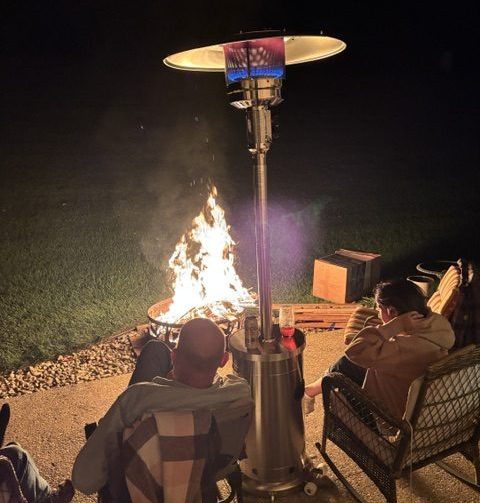
We ended our day with a peaceful backyard fire with friends. Life is good. -
Anything to Declare?
Awanabatch started out as a magical place to visit. A place where I could relax and unwind from the busy pace at home.
Over time, I’ve somehow managed to turn it into another source of stress. I’ve already shared my angst over the waiting list and my overwhelming desire to make sure our guests have the time of their lives. I’ve gotten to the point where I occasionally need a vacation from my vacation.
Thurston is in Batchawana this week with his brother. They went up to work on cabin projects, do some fishing and, supposedly, take the boat out for the winter.
Then he called yesterday to check our calendar.
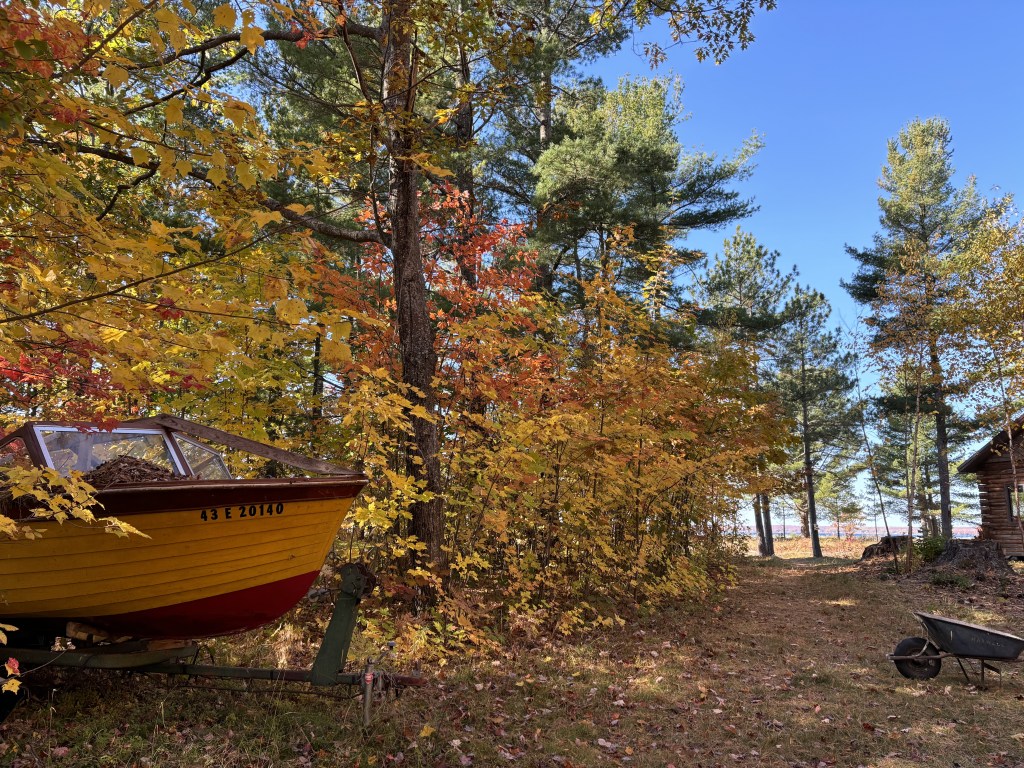
Maybe they won’t take the boat out after all. Maybe we could go up just one more time.
I should be excited. Fall in Ontario is beautiful, and so are pontoon rides on the river—as long as you’re bundled up.
Unfortunately, I’m still suffering a little PTSD from one particular trip earlier this summer.
After realizing we were going to be short on comfortable beds for our friends, we made a last-minute decision to pull the camper up with us. I was a little nervous about Thurston towing it over the Mackinac Bridge and dealing with traffic.
Turns out that would be the least of my worries.
Having used the camper for other trips this year, I knew it was pretty well stocked. We loaded our clothes and headed out, making our usual stop at Meijer for perishables and alcohol. I grabbed Thurston’s bottle of tequila, but I couldn’t decide what I wanted. Eventually, I bought two smaller bottles—one blueberry vodka and one plain vodka.
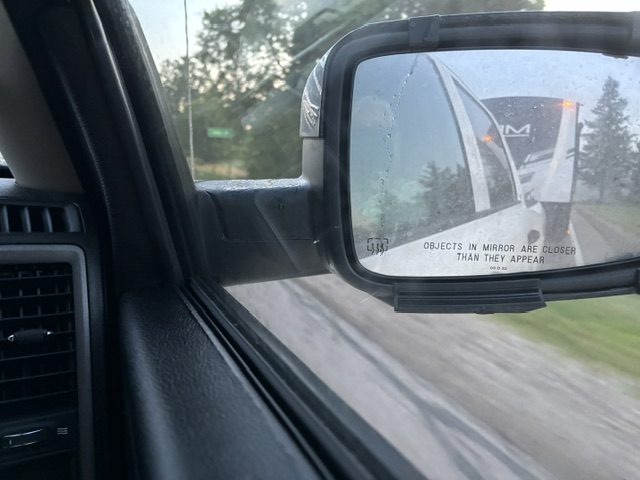
I’ve never spent much time studying the fine print on a liquor bottle. Pints, fifths, liters; I know these measurements exist. I just don’t generally involve myself with them. Two little bottles equal one big bottle. That was the extent of my international customs calculations.
As we approached the Canadian checkpoint with our passports and receipts in hand, we chose a line. Immediately, we knew it was the wrong one.
The other lines were clearing at warp speed while ours moved at a snail’s pace. When we finally reached the window, our officer appeared to be new. She asked a million questions and reviewed our passports like she’d never seen one before.
Then she asked about alcohol.
I confidently explained that while I had purchased three bottles, two were small and together were about the equivalent of the bottle of tequila we always bought.
“How many ounces are they?”
Well.
I had no idea. They were in the camper with all the groceries. The receipt didn’t say.
She handed us a yellow slip and directed us to the search lane.
Now Thurston was fuming.
“Why did you buy three bottles? You know two is the limit.”
Because I couldn’t make up my mind. Besides, they were small. We were fine.
I got out of the truck, intending to retrieve the bottles and prove my point.
I never made it.
Three officers and a dog approached the truck.
“Step in front of the vehicle, ma’am.”
I was still remarkably confident. Until the officer emerged from the camper with an armload of partial bottles of alcohol. Yup – we were hauling a bar on wheels.
Suddenly, the exact size of my blueberry vodka seemed considerably less important.
I’ve said that chemo brain not only affects the patient but also the caregiver. If I’d forgotten about all that alcohol, what else had I forgotten?
Granddaughter Camp. Friends Camp. People brought things. People might have left things. What else did I forget to declare?
They went through the truck, my purse and even our groceries. When one of the officers asked who had packed the camper, Thurston whipped his head around to look at me so fast I’m surprised he didn’t hurt himself.
He didn’t say a word. He didn’t have to. His deer-in-the-headlights expression said it all. He was innocent. And willing to cooperate fully with authorities.
In a real-life case of good cop, bad cop; one officer was pretty scary while the other seemed to find humor in the situation. Grama inadvertently trying to cross the border with her bar on wheels.
I was far too busy being terrified to appreciate the joke.
Eventually, an officer told us his supervisor had instructed him to send us back to the United States, but he didn’t believe that was necessary.
“Have a seat and we’ll get back to you.”
So, we sat. And waited. Like children sent to the principal’s office; they gave us plenty of time to think about what we had done.
Several dollars and a couple nerve-racking hours later, we were finally allowed to continue into Canada with our camper, groceries and what remained of our dignity. Minus our alcohol. And notified that our little adventure would mean automatic searches on future trips. Apparently, I will be guilty until the search dog declares me innocent.
Which brings me back to Thurston’s phone call.
The boat is still in the water. The fall colors are beautiful. The fishing might be good. There’s still time for one more trip to Awanabatch.
I’ve thought about it.
I’ll go.
But there are conditions.
We can take his truck. We’ll even make that trip to Meijer for groceries; but Thurston will be in charge of buying the alcohol.
And the camper stays home.
Yes – Thurston has proven that he can successfully tow it. Sadly, it seems that I can’t be trusted to remember what I put in it.
-
The Missing Peace
I think the last thing a young working person wants to hear from a retired person is how bored they are. No one is going to feel sorry for you. I have plenty I can do when I’m home; I just don’t particularly want to do any of it. Sweep. Dust. Clean. Do laundry. Deal with insurance. Maybe it’s because there’s no satisfaction in finishing any of it. Three days later, it all needs doing again.
When I worked, I thrived on having too much to do. As if I didn’t have enough on my plate, I volunteered. Now that I have time to volunteer, I’m burned out on it. I haven’t found my next passion project yet.
Something I read recently made me think about what it means to feel whole. The light went on. Maybe boredom isn’t the problem. Maybe I’m still looking for the piece of my life that will give me peace.
For most of my adult life, I was a mother with a career I loved. Helping people was a big piece of who I was. Then Thurston got sick, and I retired early and moved right into another job: Being everything he needed me to be. After his transplant, that meant taking responsibility for things like his central line, medications and appointments, along with running the household by myself.
Thankfully, four years later, Thurston can take care of himself and helps me with household chores. The job I had taken so seriously was over. Exactly what we’d hoped for. I just hadn’t considered how I would feel when that job ended, too.
I’ve always told my kids, “If I don’t know what I want to be when I grow up, don’t panic if you don’t know either.” I meant it as reassurance for them. I didn’t realize I’d need to take my own advice in retirement.
So here I am, writing, looking to fill the hole left behind by all the things that used to define me. I’m hopeful but just not sure yet.
No matter our age, we all like knowing that something we do matters to somebody. If something I’ve written has made you laugh, reminisce or think, let the editor know. I wouldn’t mind knowing myself.
I’m still figuring out what I want to be when I grow up.
We’re all aging. Let’s do it out loud.
— Nora
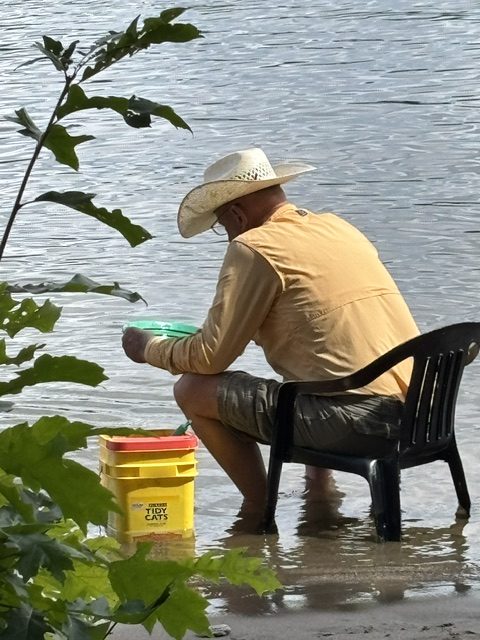
Thurston enjoys panning for gold at Awanabatch….I search for stories… As printed in The County Journal September 12, 2026
-
The Waiting List
It didn’t take long for the secret to get out. Tal and his mother were the first friend visitors of ours to visit Awanabatch but word spread fast. Thurston and his family own an amazing, one-of-a-kind property on Lake Superior in Canada.
Hints became commonplace at get-togethers—some subtle and some not so subtle. Adding one more thing for me to stress over: keeping peace among the ranks.
It’s not just about managing the growing list of people who would love to come up; it’s also about working around the family’s shared calendar. You can’t simply call your friends and ask, “What week works for you?”

(Thanks Clipart Library for the image) With nine owners, we drew numbers to determine who got first choice of dates. As luck would have it, we drew number seven, meaning six others chose their weeks before us. By the time our turn comes around, most of the peak weather weeks are gone.
You get what you get and hope for the best. Two things you can’t depend on are the fish and the weather. The guys hope the fish are biting, while the ladies hope for some sun. I prefer it to be hot enough to get in the water. Even in August, we can’t guarantee a week of fun in the sun; it might be summer in Michigan and early fall in Batchawana.
If you invite X, then you must invite Y and Z. You don’t want to invite two alphas at the same time, nor do you want too many planners in the same group. I find myself thinking through the dynamics and second-guessing who will get along with whom. You know—the self-appointed activity director in me kicking in.
While many people think they want to come, I know some of them wouldn’t really enjoy the slow pace, the critters or the lack of modern conveniences like Wi-Fi, television and stores within minutes. This isn’t an all-inclusive resort. On the flip side, some haven’t been invited because we’re afraid; they might like it so much they wouldn’t want to leave!
Several people have been invited, but the timing didn’t work out. You can hear the fear in their voices when they decline, worried that they’ll never be given another opportunity.
Some friends have gone to extraordinary lengths to earn an invitation, including donating an entire kitchen and then coming to Awanabatch to help install it. Sadly, they are so busy that they haven’t been able to return. Some have already earned return invitations, while others are still waiting for their first visit. Who would have thought that being blessed with so many good friends could be a curse?
Back in the day, Thurston and all his cousins would pile into one room and sleep on any surface available – chaise lounges, couches or the floor. Now we expect everyone to have their own bed, preferably nothing smaller than a queen-size bed.
Recently, we invited a carefully selected group of friends, and I realized that at least one of the couples would need to stay in the upstairs bedroom of the old cabin. Having not grown up sleeping there, I don’t have fond memories of staying up all night catching up with my cousins. I find it just plain creepy.
Not to mention that the last time we assigned someone to the upstairs bedroom, they came to us the next morning wondering if there was anywhere else they could sleep for the rest of the weekend. It seems the bed had developed such a deep sag in the middle that it was impossible for two people not to roll together. Add a small dog to the mix, and you have a recipe for disaster.
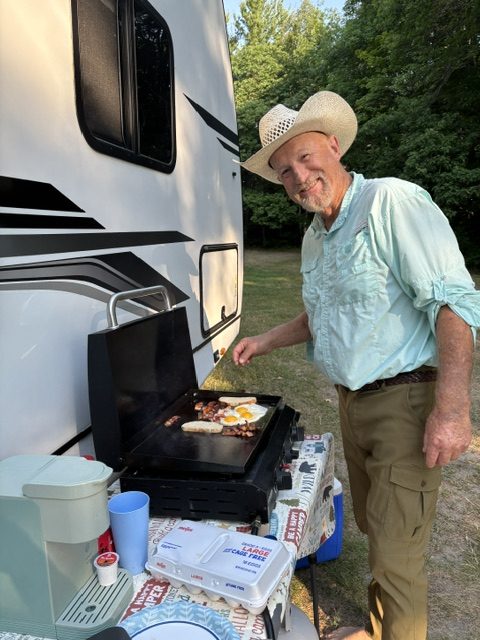
Thurston loves making everyone breakfast To avoid a repeat of that, our last-minute solution was to hook up the camper and bring it with us. It solved our sleeping problem – while creating an entirely different problem before we ever reached Awanabatch. But that’s a story of its own.
Provided you make it onto the list and through the border crossing, we have very few rules—other than enjoying yourself. You will, however, be expected to contribute something to the bar: a fifth of liquor or a case of your preferred beverage, whether you drink or not. Alcohol is not readily available up there, and it comes at a high price. (Even higher when there’s seizure and penalties involved!)
I create a spreadsheet outlining the meal plan, and everyone brings their assigned food—along with enough extra to feed us for another week if we get stranded. Everyone is overly generous with their contributions of food and drink, sometimes to a fault, since taking most of it back across the border is a no-no.
While Thurston and I enjoy inviting people back, there’s something special about first timers. We love watching their reactions to the property, introducing them to our traditions and listening as Thurston shares the history of Awanabatch. Our goal is always to leave them wanting to return—even though the waiting list for a second visit is long.
As much as we enjoy sharing Awanabatch, we’ve discovered that we like it best when it’s just the two of us. I’m happy to wear my hostess hat for most of the week, but I need at least a couple of days simply to be there.
So, who will make next year’s invitation list? I’m thinking I may need another spreadsheet – perhaps with separate columns for Invited, Invited Back and Still Waiting.
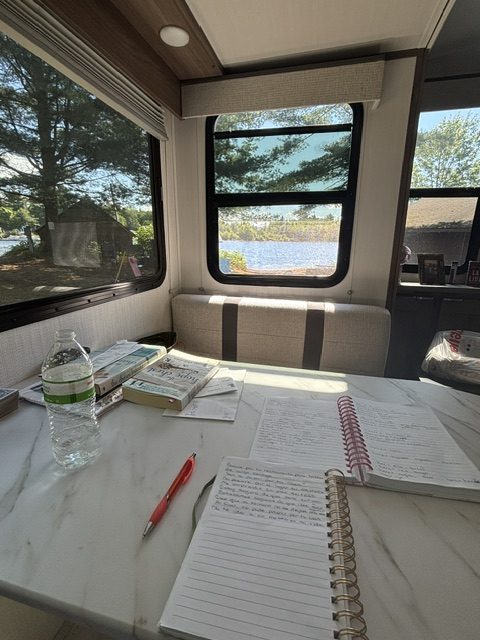
The views were amazing from the camper dinette.
-
Subscribe
Subscribed
Have a WordPress.com account? Log in now.

